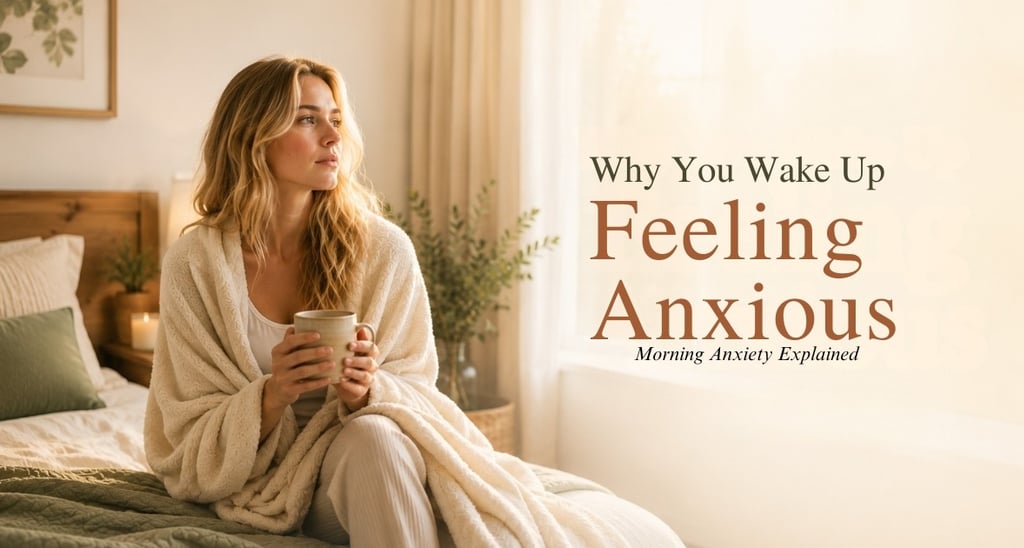

Why You Wake Up Feeling Anxious (Morning Anxiety Explained)
Have you ever opened your eyes in the morning and instantly felt nervous, worried, or on edge before your day had even started?
Your heart races. Your stomach feels tight. Your mind jumps straight to your to-do list or everything that could go wrong.
If this sounds familiar, you’re not alone.
For a long time, I thought something was wrong with me. I would wake up already feeling overwhelmed, even on days when nothing stressful was planned. I assumed it was just part of being busy, but once I learned how stress hormones work—especially cortisol in the morning—everything started to make much more sense.
The good news is that morning anxiety doesn’t always mean you have an anxiety disorder. Often, it’s your body’s natural stress response becoming a little too active.
Let’s look at why it happens and what you can do to start your mornings feeling calmer.
🟦 Quick Answer
Morning anxiety often happens because your body naturally produces more cortisol shortly after waking. This is called the cortisol awakening response and helps you feel alert. However, poor sleep, ongoing stress, blood sugar fluctuations, caffeine, or hormonal imbalances can intensify this response, leaving you feeling anxious before your day even begins. Simple lifestyle habits like eating breakfast, managing stress, improving sleep, and gentle morning movement may help reduce morning anxiety.
Table of Contents
What Is Morning Anxiety?
Why Cortisol Is Higher in the Morning
Common Causes of Morning Anxiety
Signs Your Cortisol May Be Too High
Simple Ways to Feel Calmer in the Morning
When Should You Speak to Your Doctor?
Final Thoughts
FAQ
Disclaimer
Disclosure
What Is Morning Anxiety?
Morning anxiety is exactly what it sounds like—feeling anxious soon after waking up.
It isn’t a medical diagnosis by itself. Instead, it’s a symptom that many people experience from time to time.
You might notice:
Racing thoughts
A pounding heart
Tight chest
Upset stomach
Feeling shaky
Worry about the day ahead
Trouble relaxing
For some people, these feelings disappear after breakfast, or once they start moving. Others may notice them lasting much longer.


Why Cortisol Is Higher in the Morning
One of the biggest reasons behind morning anxiety is something called the cortisol awakening response.
Cortisol is often called the “stress hormone,” but that’s only part of the story.
Your body actually needs cortisol.
It helps:
Wake you up
Control blood sugar
Reduce inflammation
Support energy
Keep your body clock working properly
Normally, cortisol rises naturally within about 30 to 45 minutes after waking. This helps prepare your body for the day ahead.
The problem happens when your body is already under stress.
If you’ve been dealing with:
Poor sleep
Chronic stress
Overworking
Hormonal changes
Illness
your morning cortisol response may become stronger than it needs to be.
Instead of simply feeling awake, you may feel anxious.
Common Causes of Morning Anxiety
1. Chronic Stress
When your brain thinks you’re under constant pressure, it keeps your stress response switched on.
I noticed this during one particularly busy season. Even before checking my phone, my brain was already running through emails, appointments, and everything I needed to do. My body acted like it was preparing for danger instead of just another Tuesday.
Small daily stress adds up over time.
2. Poor Sleep
Not getting enough quality sleep affects almost every hormone in your body.
Even if you spend eight hours in bed, broken sleep can leave your nervous system feeling more sensitive the next morning.
Improving your sleep routine often makes a noticeable difference.
A comfortable weighted blanket or sleep mask can help create a relaxing bedtime environment and support better sleep.
3. Low Blood Sugar
After several hours without eating, your blood sugar naturally drops.
For some people, this can make cortisol rise even higher.
That may explain why anxiety often improves after eating breakfast.
Try choosing meals that include:
Protein
Healthy fats
Fibre
instead of sugary cereals or pastries.
Related reading:
4. Too Much Caffeine
Coffee isn’t bad for everyone.
But drinking several cups on an empty stomach first thing in the morning may increase jitters if you’re already anxious.
Try drinking water first and eating breakfast before your coffee.
Some people also enjoy switching one cup of coffee for herbal tea.
A calming herbal tea collection with chamomile, lemon balm, or peppermint can make a lovely addition to a slow morning routine.
5. Hormonal Changes
Women may notice more morning anxiety during:
PMS
Perimenopause
Menopause
Times of hormonal imbalance
Changes in estrogen and progesterone can influence both cortisol and mood.
That doesn’t mean hormones are the only cause—but they can certainly contribute.
Signs Your Cortisol May Be Too High
While only testing can confirm hormone levels, some common signs include:
Waking up anxious
Feeling wired but tired
Afternoon energy crashes
Difficulty relaxing
Sugar cravings
Trouble sleeping
Feeling overwhelmed by small tasks
Many of these symptoms can also have other causes, which is why it’s important not to self-diagnose.


Simple Ways to Feel Calmer in the Morning
The good news is that small habits can make a big difference.
1. Don’t Check Your Phone Immediately
This one changed my mornings more than I expected.
Instead of opening emails or social media while still in bed, I now give myself about 20 minutes before looking at my phone.
My mind feels much quieter.
2. Drink Water First
After sleeping for several hours, you’re naturally dehydrated.
A large glass of water can help your body wake up gently.
Keeping a reusable water bottle beside the bed makes this easier.
A large insulated water bottle can encourage better hydration throughout the day.
3. Eat a Balanced Breakfast
Try including:
Greek yoghurt
Eggs
Oats
Nuts
Fruit
Protein helps keep blood sugar more stable, which may reduce stress hormones.
Related reading:
4. Move Your Body Gently
You don’t need an intense workout.
Sometimes a 10-minute walk or gentle stretching is enough.
Movement tells your nervous system that you’re safe.
Related reading:
5. Practice Slow Breathing
When anxiety appears, your breathing often becomes fast without you noticing.
Try this simple exercise:
Breathe in for four seconds.
Hold for two.
Breathe out for six.
Repeat five times.
It sounds simple, but it helps activate your body’s relaxation response.
6. Create a Calm Morning Routine
Instead of rushing from bed to work, build a routine you actually enjoy.
Mine looks something like this:
Water
Open the curtains
Five minutes of stretching
Tea
Breakfast
Journal for a few minutes
It’s not perfect every day, but those small moments help me feel more in control before the day begins.
7. Protect Your Evenings Too
Morning anxiety often starts the night before.
Getting enough sleep, limiting screen time, and avoiding heavy meals late at night all support a calmer morning.
Related reading:
When Should You Speak to Your Doctor?
Occasional morning anxiety is common.
However, speak with your healthcare provider if:
Anxiety is happening every day.
Panic attacks are becoming frequent.
It’s affecting work or relationships.
You’re avoiding normal activities.
You have chest pain or severe symptoms.
There may be other medical conditions contributing to your symptoms, and getting support is always a good idea.
Final Thoughts
Morning anxiety can feel frightening, especially when it appears before anything has even happened.
But understanding what’s happening inside your body can take away some of that fear.
Your brain isn’t trying to work against you.
Sometimes it’s simply a response to stress, poor sleep, hormonal changes, or an overactive cortisol response.
I’ve learned that small habits—not perfect ones—make the biggest difference. Drinking water before coffee, eating a balanced breakfast, taking a short walk, and giving myself a slower start have helped me feel calmer than I ever thought possible.
If you’re waking up anxious, be patient with yourself.
Small changes repeated consistently often lead to the biggest improvements over time.
Frequently Asked Questions
Is morning anxiety normal?
Yes. Many people experience anxiety shortly after waking because cortisol naturally rises in the morning. However, if anxiety is severe or persistent, it’s important to speak with a healthcare professional.
Why is my anxiety worse when I first wake up?
Your body’s natural cortisol awakening response, combined with poor sleep, ongoing stress, or low blood sugar, may make anxiety feel stronger first thing in the morning.
Can high cortisol cause morning anxiety?
High cortisol doesn’t always cause anxiety, but elevated cortisol levels may increase feelings of nervousness, a racing heart, and worry, especially shortly after waking.
Does breakfast help morning anxiety?
For some people, yes. A balanced breakfast with protein, healthy fats, and fibre may help stabilise blood sugar and support a calmer start to the day.
What should I avoid if I wake up anxious?
Try avoiding checking your phone immediately, drinking lots of coffee on an empty stomach, skipping breakfast, and rushing into your day without a few calming minutes.
Can exercise reduce morning anxiety?
Gentle movement like walking, stretching, or yoga may help reduce stress hormones and improve mood without placing extra stress on your body.
Disclaimer
This article is for informational and educational purposes only and is not intended as medical advice. Always speak with your doctor or another qualified healthcare professional before making significant changes to your diet, exercise routine, or lifestyle, especially if you have an existing medical condition or health concerns. Individual needs vary, and what works for one person may not be suitable for another.
Disclosure: This article may contain affiliate links. If you purchase through these links, I may earn a small commission at no extra cost to you. I only recommend products I genuinely believe can support a healthy lifestyle. Thank you for supporting Balanced Fit Life UK. 💚
© 2026 Balanced Fit Life. All rights reserved.
Balanced Fit Life
Gentle hormone health and stress support for overwhelmed women.
Contact:
The information on this website is for educational purposes only and is not a substitute for medical advice.
Disclaimer