
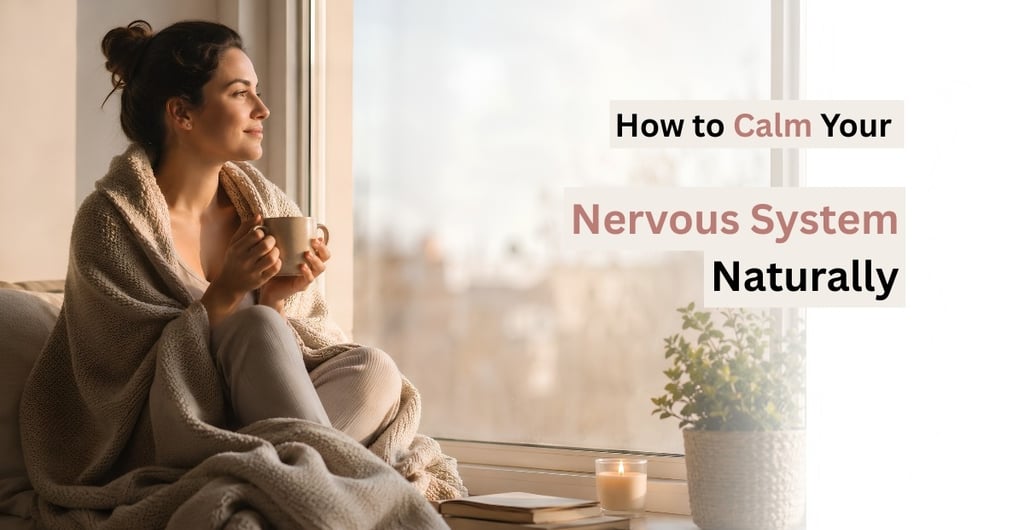
Have you ever felt tired but unable to relax? Maybe your mind keeps racing at night, small problems feel overwhelming, or you constantly feel “on edge” for no clear reason.
I know that feeling well.
There was a time when I thought being stressed all the time was simply part of being busy. Between work, family responsibilities, endless notifications, and trying to keep up with everything, I felt like my body was stuck in high alert mode. Even when I sat down to relax, I couldn’t fully switch off.
What I didn’t realise was that my nervous system needed support.
The good news is that you don’t need expensive treatments or complicated wellness routines to start feeling calmer. Small daily habits can help your body feel safe, relaxed, and balanced again.
In this article, we’ll look at simple ways to calm your nervous system naturally and support better sleep, lower stress, and improved overall well-being.
What Is the Nervous System?
Your nervous system is your body’s communication network. It helps control everything from your heartbeat and breathing to your emotions and stress response.
When you face stress, your body activates its “fight-or-flight” response. This can be helpful in emergencies, but many of us spend too much time in this state.
Modern life often keeps us stressed through:
Constant phone notifications
Busy schedules
Poor sleep
Financial worries
Work pressure
Family responsibilities
Over time, your nervous system may struggle to switch back into a calm and restful state.
Common signs include:
Feeling anxious or overwhelmed
Trouble sleeping
Racing thoughts
Fatigue
Irritability
Frequent headaches
Feeling tired but wired
The good news is that simple daily habits can help.
1. Start Your Day with Natural Sunlight
One of the easiest ways to support your nervous system is to get outside shortly after waking up.
Morning sunlight helps regulate your body’s natural clock, known as the circadian rhythm. This can support healthy cortisol patterns and improve sleep later in the day.
I started making it a habit to take my morning coffee into the garden for just 10 minutes. It seemed too simple to matter, but I quickly noticed that I felt more awake during the day and calmer in the evening.
Try to spend 10–15 minutes outdoors each morning, even if it’s cloudy.
2. Practice Slow Deep Breathing
Breathing is one of the fastest ways to signal safety to your nervous system.
When we’re stressed, our breathing often becomes shallow and quick. Slowing it down can help your body shift into a more relaxed state.
Try this simple breathing exercise:
Breathe in through your nose for 4 seconds.
Hold for 4 seconds.
Breathe out slowly for 6 seconds.
Repeat for 2–5 minutes.
This simple habit can be especially helpful during stressful days.
3. Go for a Daily Walk
You don’t need intense workouts to support your nervous system.
Gentle movement often works surprisingly well.
Walking helps release built-up tension, improves circulation, and gives your mind a break from constant stimulation.
One thing I’ve noticed is that even a short 20-minute walk can completely change my mood. Problems seem smaller, my thoughts feel clearer, and my body feels less tense.
Aim for:
20–30 minutes daily
Outdoor walks when possible
A comfortable pace
Walking after dinner can be especially calming.
4. Reduce Constant Stimulation
Many of us spend hours moving between emails, social media, text messages, videos, and news updates.
Our brains rarely get a chance to rest.
If you constantly feel overwhelmed, try creating small periods of quiet during the day.
Simple ideas include:
Turning off unnecessary notifications
Taking breaks from social media
Eating meals without screens
Spending a few minutes in silence
You don’t have to disconnect completely. Even short breaks can help your nervous system recover.
5. Drink Calming Herbal Tea
A warm drink can become a simple signal that it’s time to slow down.
Some popular options include:
I personally enjoy chamomile tea in the evening. The ritual itself often feels just as calming as the tea.
6. Create a Consistent Evening Routine
Your body loves routines.
A predictable evening routine helps your nervous system recognise that it’s safe to relax and prepare for sleep.
Your routine doesn’t need to be complicated.
Try:
Dimming lights
Drinking herbal tea
Reading a book
Gentle stretching
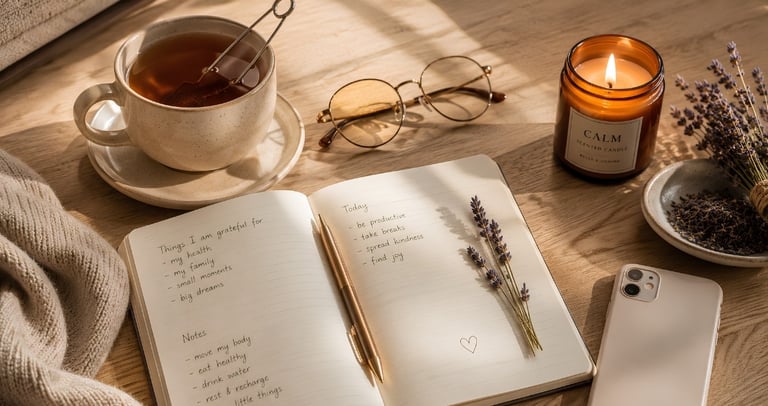
Journaling
Going to bed at a similar time each night
If you struggle with stress at bedtime, you may also enjoy our article on 7 Night Habits That Help Lower Cortisol Naturally (And Sleep Better).
Even a simple 20-minute routine can make a noticeable difference.
7. Prioritise Quality Sleep
Sleep is one of the most powerful tools for nervous system health.
Unfortunately, stress and poor sleep often create a frustrating cycle:
Stress makes sleep harder.
Poor sleep increases stress.
Breaking this cycle starts with creating healthy sleep habits.
Helpful sleep tips include:
Keeping your bedroom cool
Limiting screens before bed
Avoiding caffeine late in the day
Following a regular sleep schedule
When I began taking sleep more seriously, I noticed improvements in nearly every area of my life, including mood, energy, patience, and focus.
A comfortable silk sleep mask can help create a darker sleep environment and support a relaxing bedtime routine.
8. Try Simple Journaling
Journaling can help clear mental clutter before it builds into overwhelm.
You don’t need to write pages every day.
Try a simple brain dump:
What is stressing me right now?
What can I control?
What can wait until tomorrow?
Many people find that writing down their worries helps them stop replaying them in their minds.
I often keep a notebook beside my bed and write down any lingering thoughts before sleep. It helps me feel like I’ve “parked” those thoughts somewhere safe.
A guided wellness journal can make it easier to build a consistent journaling habit.
9. Spend More Time in Nature
Nature has a calming effect that many of us underestimate.
Fresh air, greenery, sunlight, and natural sounds can help lower feelings of stress and overwhelm.
You don’t need a mountain retreat.
Simple options include:
Walking in a local park
Sitting in the garden
Visiting a nature trail
Reading outside
Whenever I feel particularly stressed, spending time outdoors almost always helps me feel more grounded.
Sometimes the simplest solutions are the most effective.
10. Learn to Protect Your Energy
One of the biggest lessons I’ve learned is that nervous system health isn’t only about relaxation.
It’s also about boundaries.
Constantly saying yes, overcommitting, and trying to please everyone can keep your body in a state of stress.
Ask yourself:
Do I need to do this?
Can it wait?
Can someone else help?
Am I saying yes because I want to or because I feel guilty?
Protecting your energy isn’t selfish.
It’s an important part of long-term well-being.

Small Habits Add Up
Many people search for a quick fix when they’re stressed.
But in my experience, nervous system support is often about small habits repeated consistently.
The changes that helped me most weren’t dramatic.
They were simple things like:
Going outside each morning
Walking more often
Drinking herbal tea
Creating a bedtime routine
Spending less time on my phone
Protecting my energy
These habits may seem small, but together they can make a big difference.
If you’re feeling overwhelmed right now, don’t try to change everything at once.
Choose one habit from this list and start there.
Small steps often create the biggest transformations over time.


Learning how to calm your nervous system naturally doesn’t require perfection.
It’s about creating small moments of safety, rest, and balance throughout your day.
Whether it’s taking a walk, practising deep breathing, spending time outdoors, or building a calming evening routine, every positive habit sends a message to your body that it can relax.
Over time, those small signals add up.
Your nervous system becomes more resilient, stress feels more manageable, and you may find yourself sleeping better, thinking more clearly, and feeling more like yourself again.
Remember: progress matters more than perfection.
Start small, stay consistent, and give yourself grace along the way.
Related Articles
Disclaimer
This article is for informational and educational purposes only and is not intended as medical advice. Always consult a qualified healthcare professional before making changes to your diet, supplements, exercise routine, or health care plan. If you experience ongoing anxiety, sleep difficulties, or health concerns, seek advice from your doctor or another licensed healthcare provider.
© 2026 Balanced Fit Life. All rights reserved.
Balanced Fit Life
Gentle hormone health and stress support for overwhelmed women.
Contact:
The information on this website is for educational purposes only and is not a substitute for medical advice.
Disclaimer