Magnesium for Stress & Hormone Balance: Benefits, Foods & How to Use It
Feeling stressed, tired, or out of balance? Discover how magnesium supports stress relief and hormone balance, the best magnesium-rich foods to eat, and how to use it safely for better energy, sleep, and overall wellbeing.
STRESS & CORTISOL


If you often feel stressed, tired, or out of balance, your body might be missing something simple — magnesium.
Magnesium is one of the most important minerals for supporting:
Stress levels
Sleep quality
Hormone balance
And yet, many women don’t get enough.
The good news?
You don’t need complicated changes — small, consistent habits can make a real difference.
What Is Magnesium?
Magnesium is a mineral involved in over 300 processes in your body.
It plays an important role in:
Nervous system regulation
Muscle relaxation
Energy production
Hormone function
When magnesium levels are low, your body may feel more stressed, tense, and fatigued.
Signs You May Need More Magnesium
You might benefit from more magnesium if you experience:
Feeling anxious or overwhelmed
Trouble falling or staying asleep
Muscle tension or cramps
Low energy
PMS symptoms
Sugar or chocolate cravings
Many of these are also linked to stress and cortisol imbalance.
If you haven’t already, you can read more here:
What Is Cortisol Belly? (Causes & Natural Ways to Reduce It)
How Magnesium Helps with Stress
Magnesium supports your nervous system and helps your body relax.
It may help to:
Lower cortisol levels
Reduce feelings of stress
Support better sleep
Improve recovery after stressful days
This is why magnesium is often recommended for stress-related symptoms and hormone support.
Magnesium & Hormone Balance
Magnesium plays a gentle but important role in hormone health.
It can help:
Support progesterone balance
Improve blood sugar stability
Reduce PMS symptoms
Support better sleep (which affects hormones)
It works gradually, supporting your body over time.
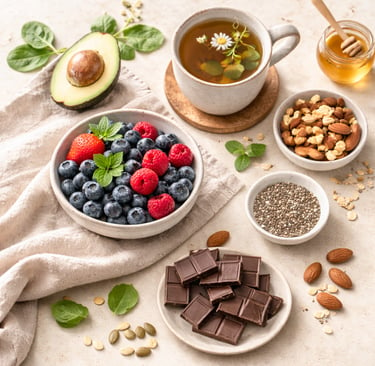
Best Magnesium-Rich Foods
A great place to start is your diet.
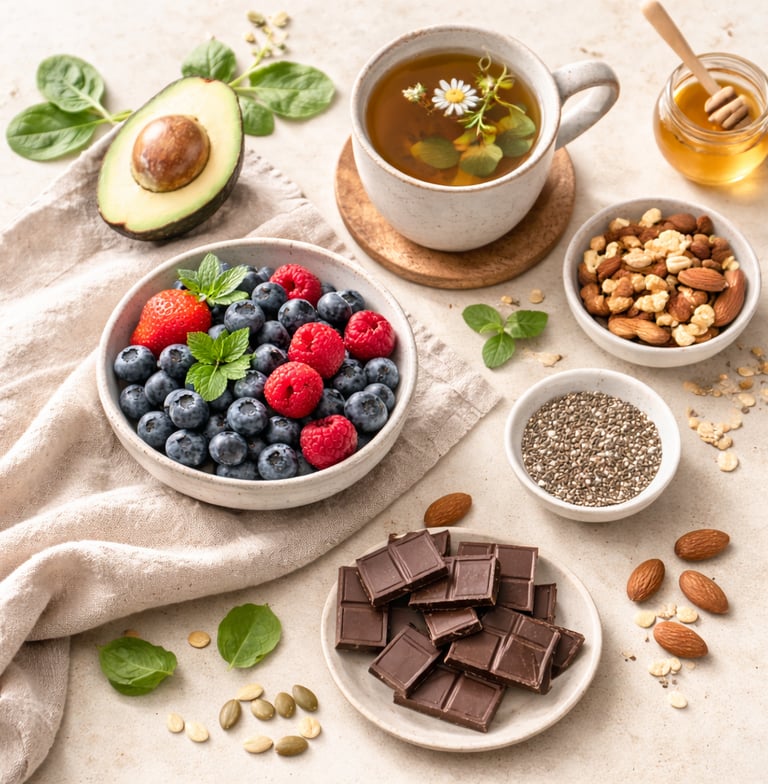
Some magnesium-rich foods include:
Dark leafy greens (spinach, kale)
Almonds and cashews
Pumpkin and chia seeds
Dark chocolate
Avocado
These foods also support overall hormone health and energy.
You can also combine this with ideas from:
10 Foods That Help Reduce PMS Symptoms Naturally
Should You Take a Magnesium Supplement?
Sometimes, food alone may not be enough — especially during periods of high stress.
Many people choose a gentle form like magnesium glycinate, which is known for its calming effect and good absorption.
A simple option like a magnesium glycinate supplement can support relaxation and sleep, especially in the evening.
(As always, choose a quality product and see what works best for your body.)
Simple Ways to Support Magnesium Levels
Along with food and supplements, these habits can help:
Reduce caffeine intake (especially on an empty stomach)
Manage stress with simple daily routines
Get consistent sleep
Eat regular, balanced meals
Even small changes can support your body more than you think.
How Long Does It Take to See Results?
Magnesium works gradually.
Many people notice:
Better sleep within a few days
Reduced tension within 1–2 weeks
More stable mood over time
Consistency matters more than perfection.
Magnesium is a simple but powerful way to support your body.
If you’ve been feeling stressed, tired, or out of balance, this could be a helpful place to start.
Your body doesn’t need extreme changes — it needs consistent support.
💛 Start Simple
If you’re not sure where to begin:
👉 Get your Free 7-Day Calm Morning Reset
Simple daily habits to help you feel calmer, more balanced, and in control — starting tomorrow.
⚠️ Disclaimer
This post may contain affiliate links. As an Amazon Associate, I earn from qualifying purchases at no extra cost to you.
© 2026 Balanced Fit Life. All rights reserved.
Balanced Fit Life
Gentle hormone health and stress support for overwhelmed women.
Contact:
The information on this website is for educational purposes only and is not a substitute for medical advice.
Disclaimer